The operational backbone for charter companies, crew dispatchers and agencies
Faster operations, full organization, clear oversight — in one NAUSYS-integrated workflow
Faster Operations
- NAUSYS-integrated booking workflow
- Crew availability and faster scheduling
- In-app chat
Full Organization
- Bookings, crew, and documents in one system
- Contracts and invoicing in one place
Clear Oversight
- NAUSYS-integrated booking workflow
- Crew availability and faster scheduling
- In-app chat
Back Office Platform Overview
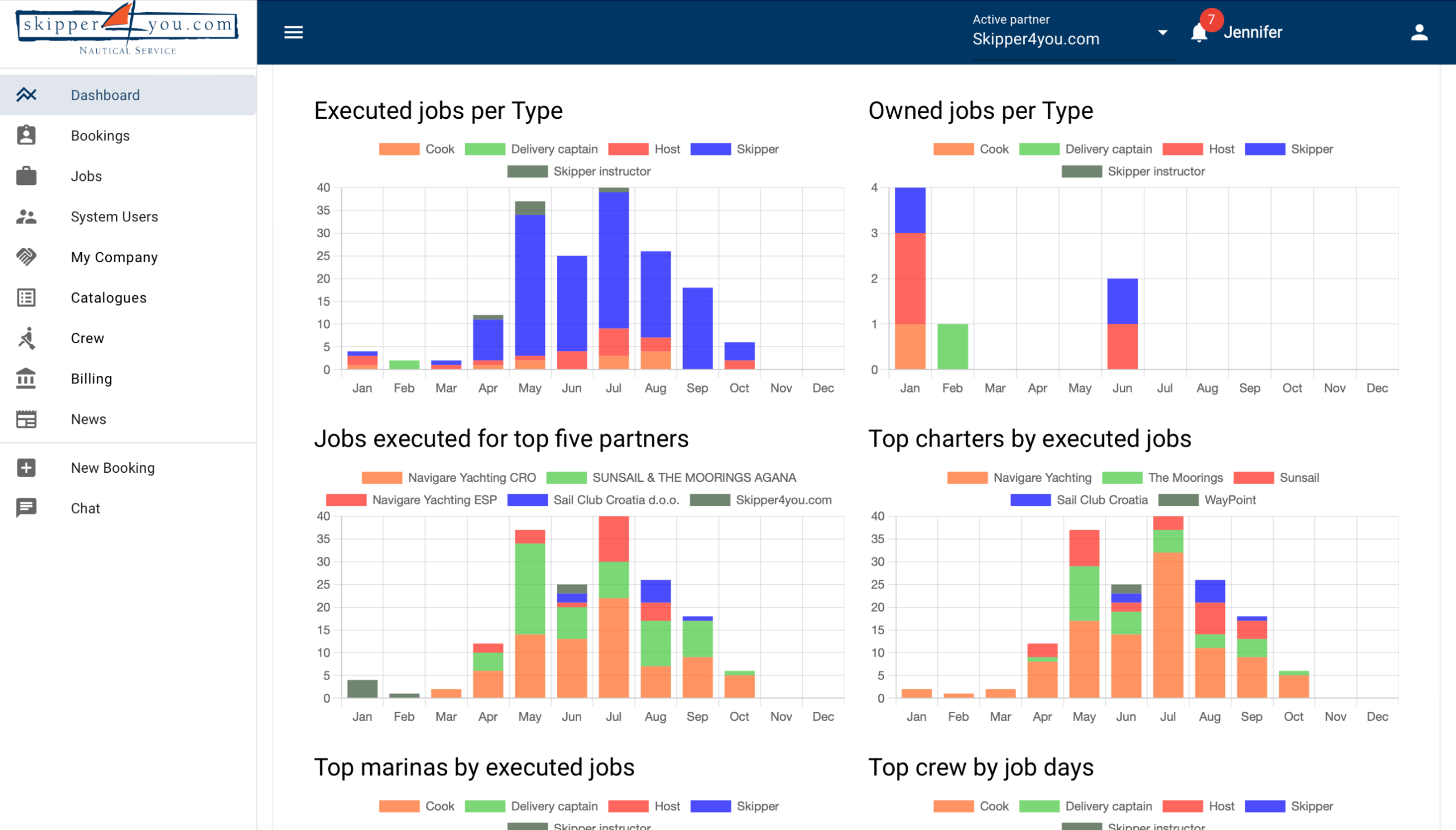
Dashboard
Visual data displayed through graphs and metrics, enabling structured tracking of jobs, activity, and overall operational performance in one place.
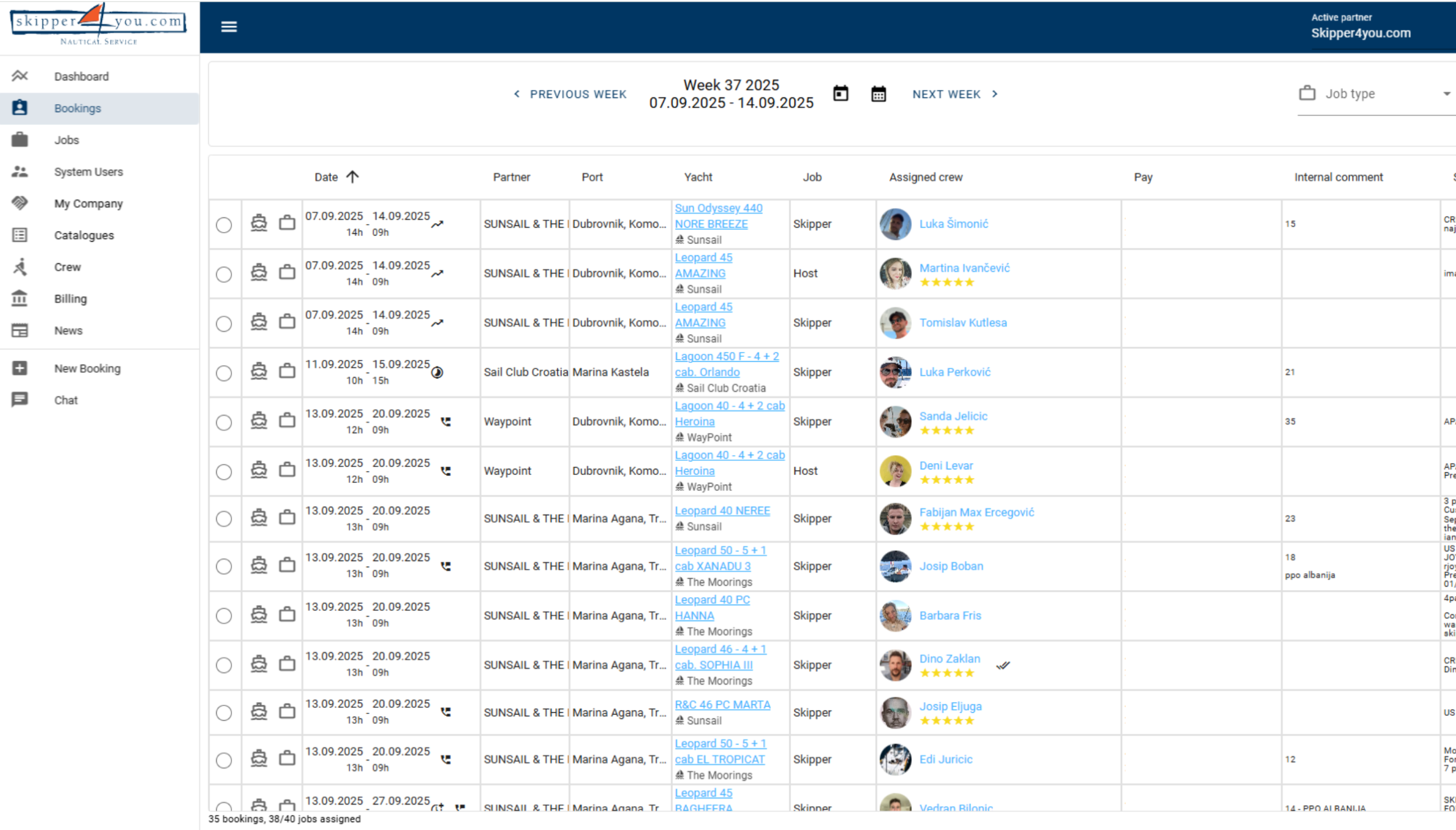
Booking
Centralized overview of all booking details, assigned crew, and engagement statuses, ensuring full operational clarity and control.
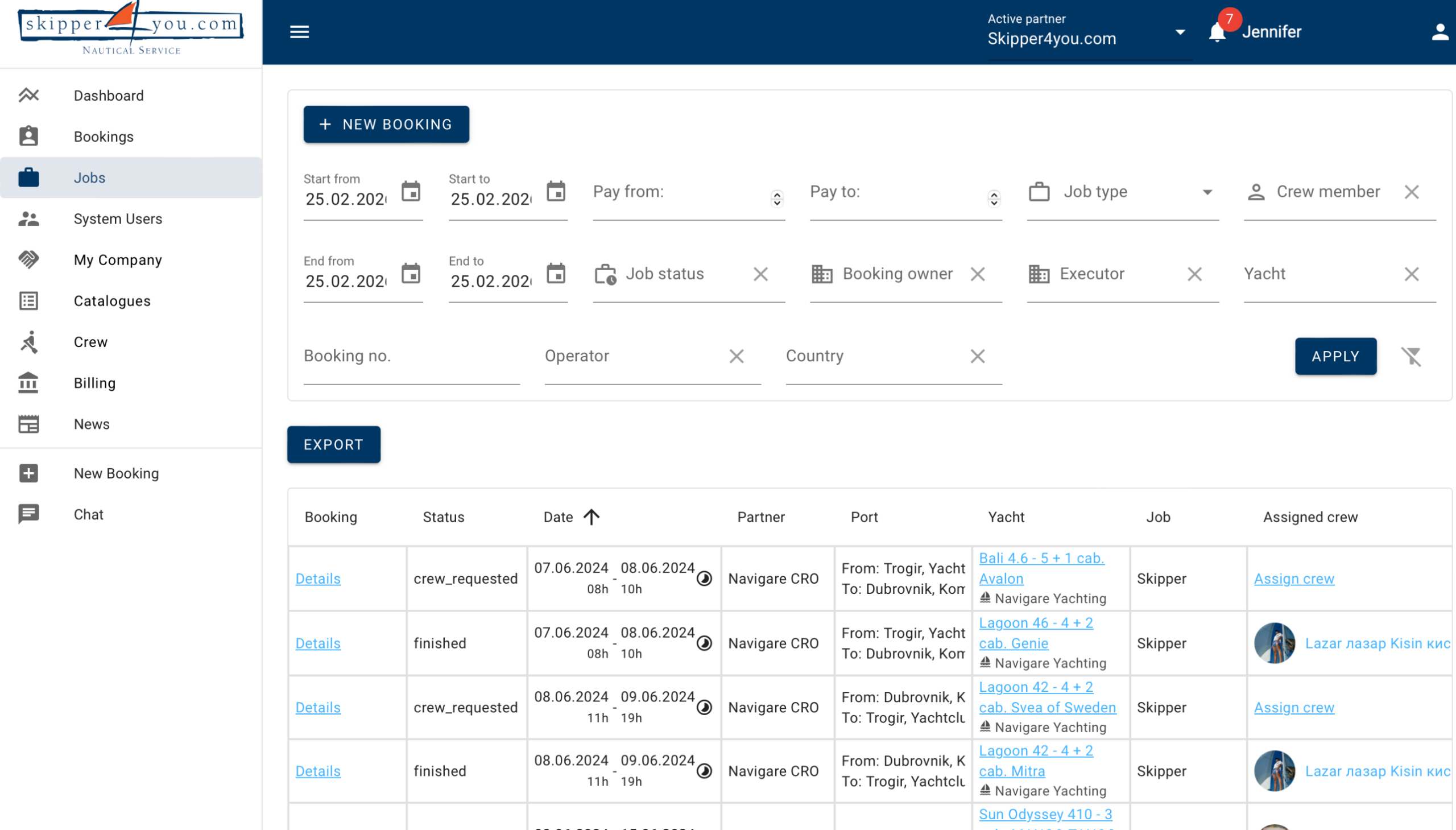
Jobs
Comprehensive workspace for managing and filtering job records by date, status, job type, crew member, yacht, location, and additional operational criteria.
Catalogues
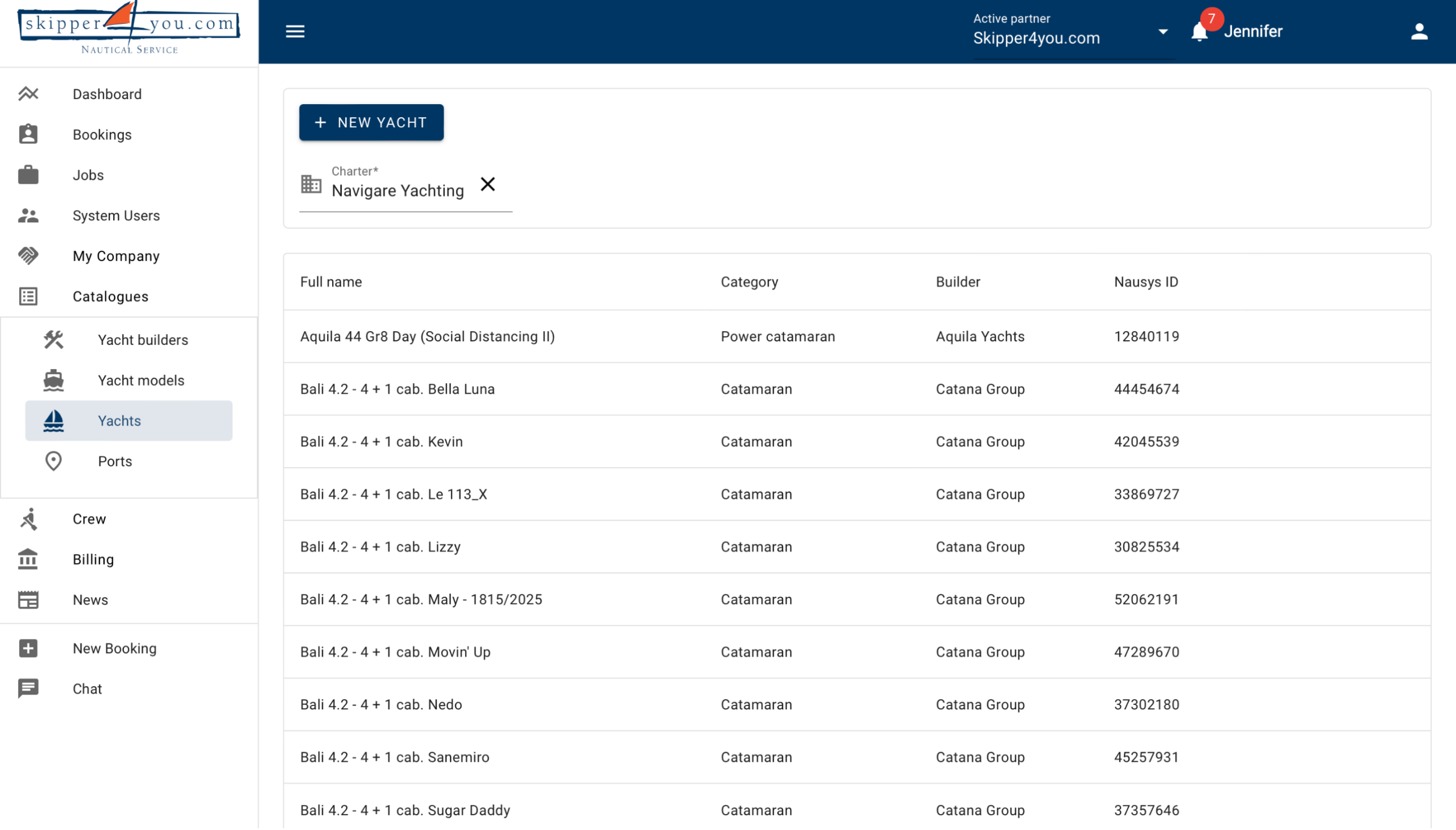
Structured overview of all yachts within the system, enabling consistent and organized fleet data management.
Crew
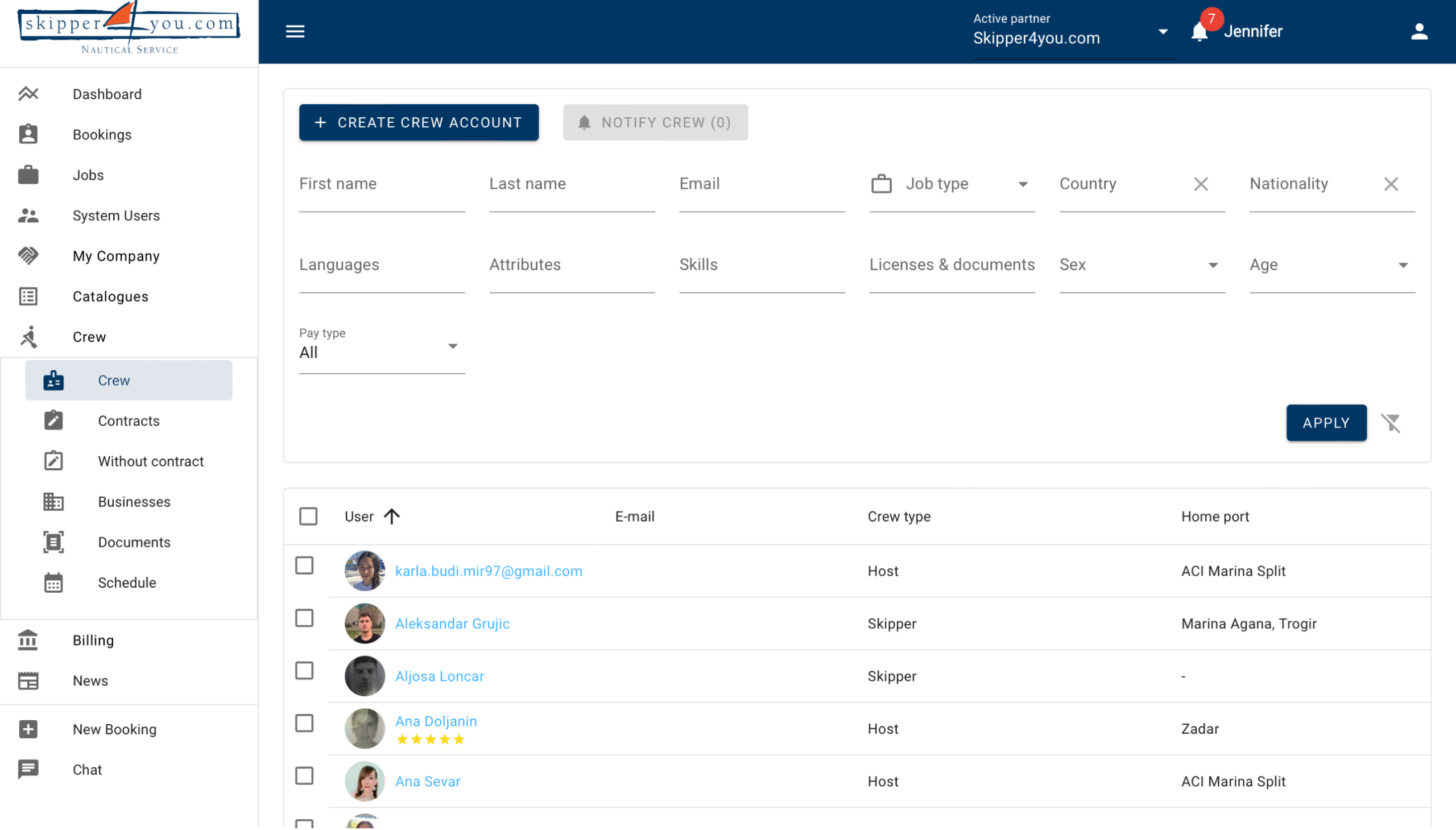
Complete registry of all crew members, including those with and without active contracts, with full profile information and required work documentation in one place.
Billing
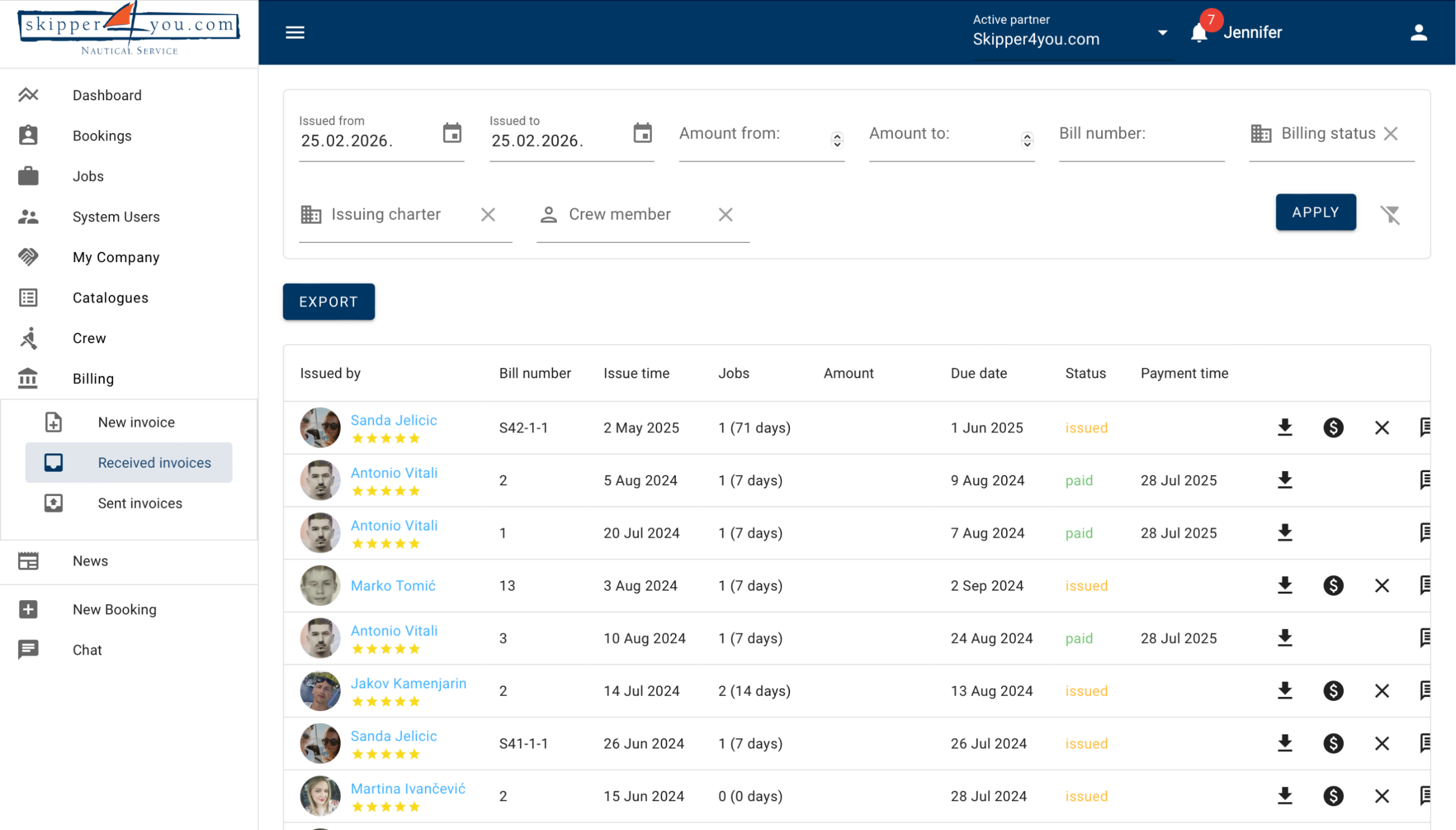
System for tracking and managing incoming invoices, with clear visibility of amounts, due dates, and payment status.
News
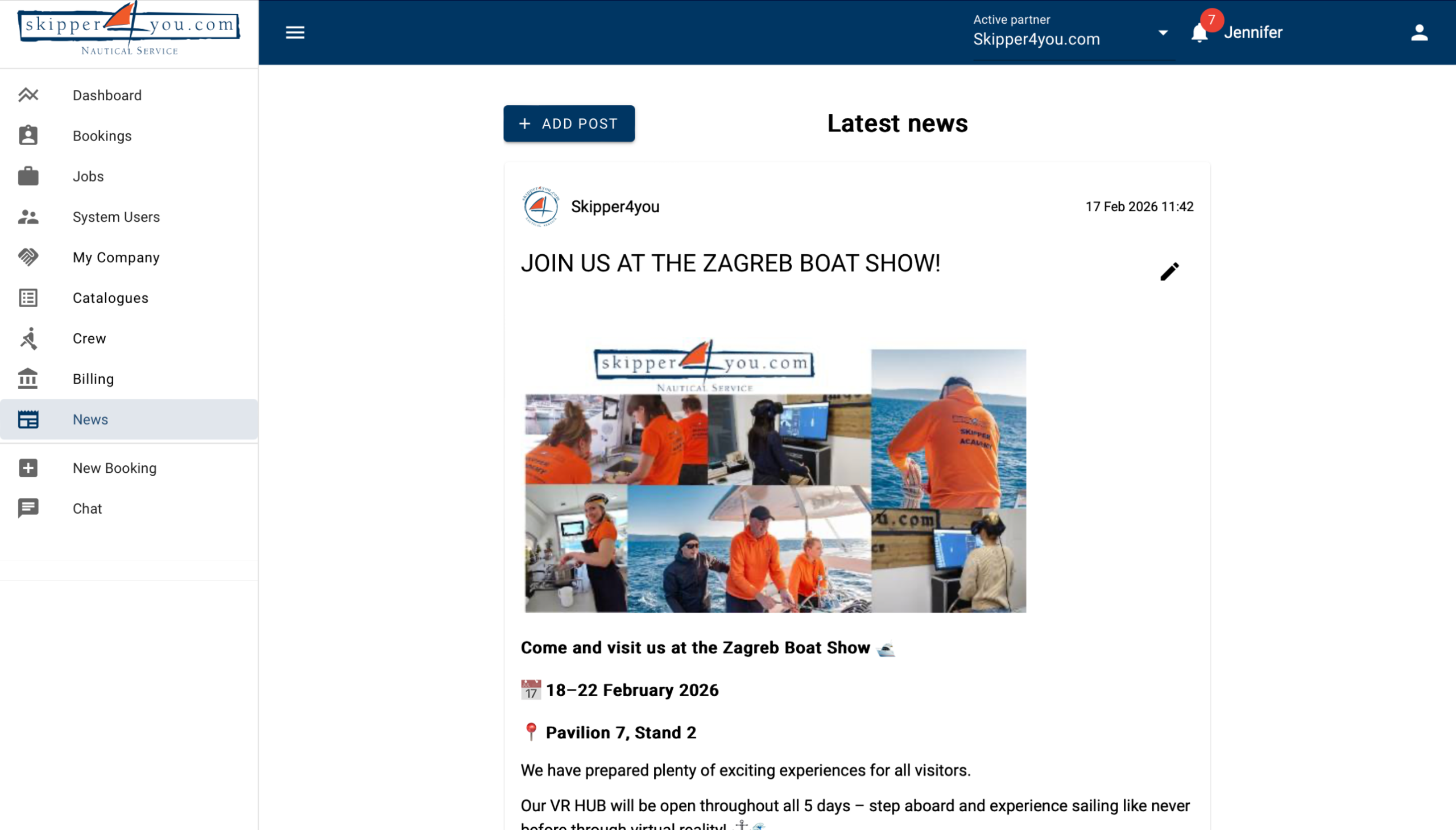
Communication system for sharing important announcements and operational updates within the application.
New Booking
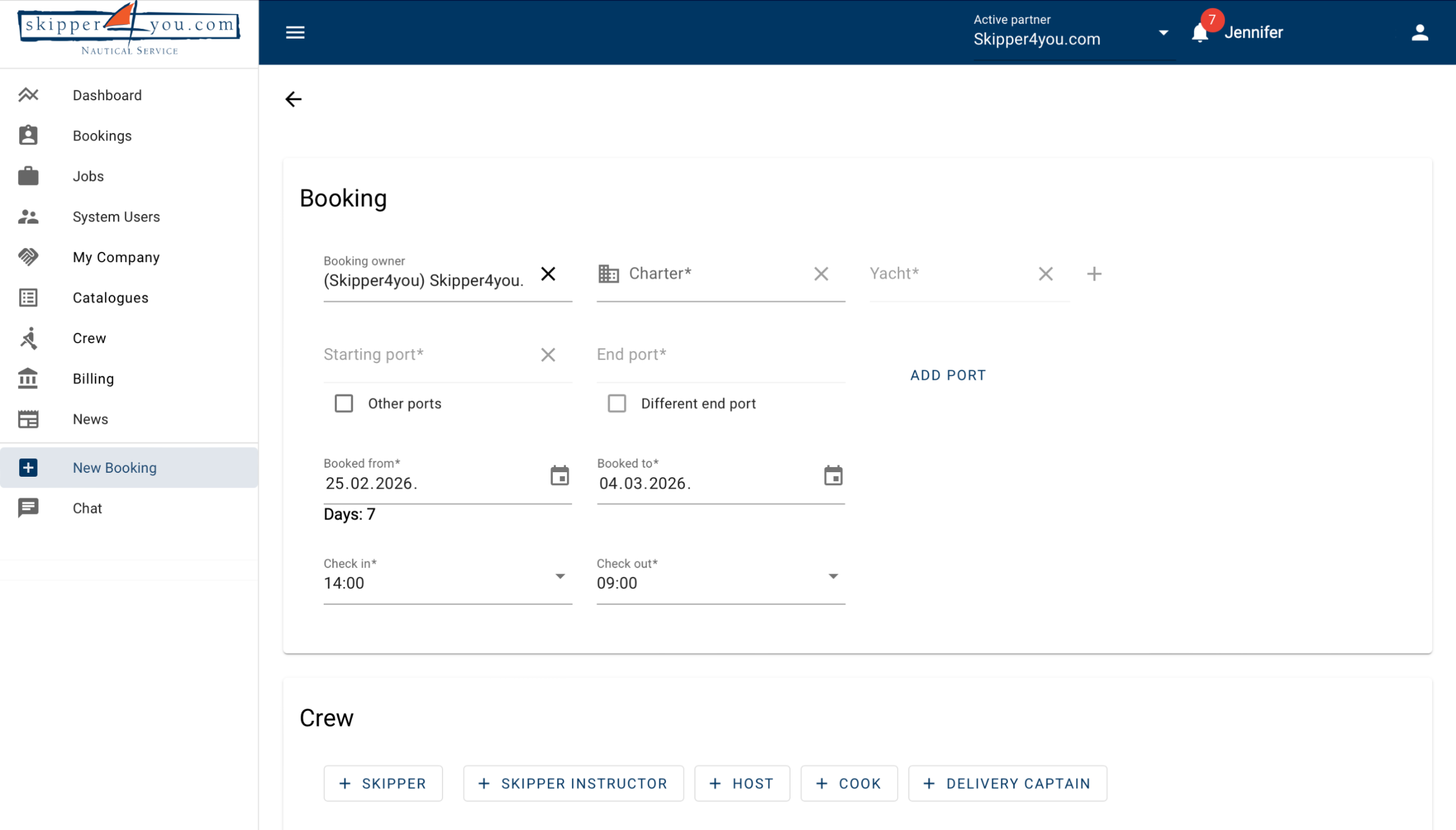
Interface for manually creating and managing bookings within the application, covering charter details, yacht assignment, scheduling, ports, and crew allocation.
Chat
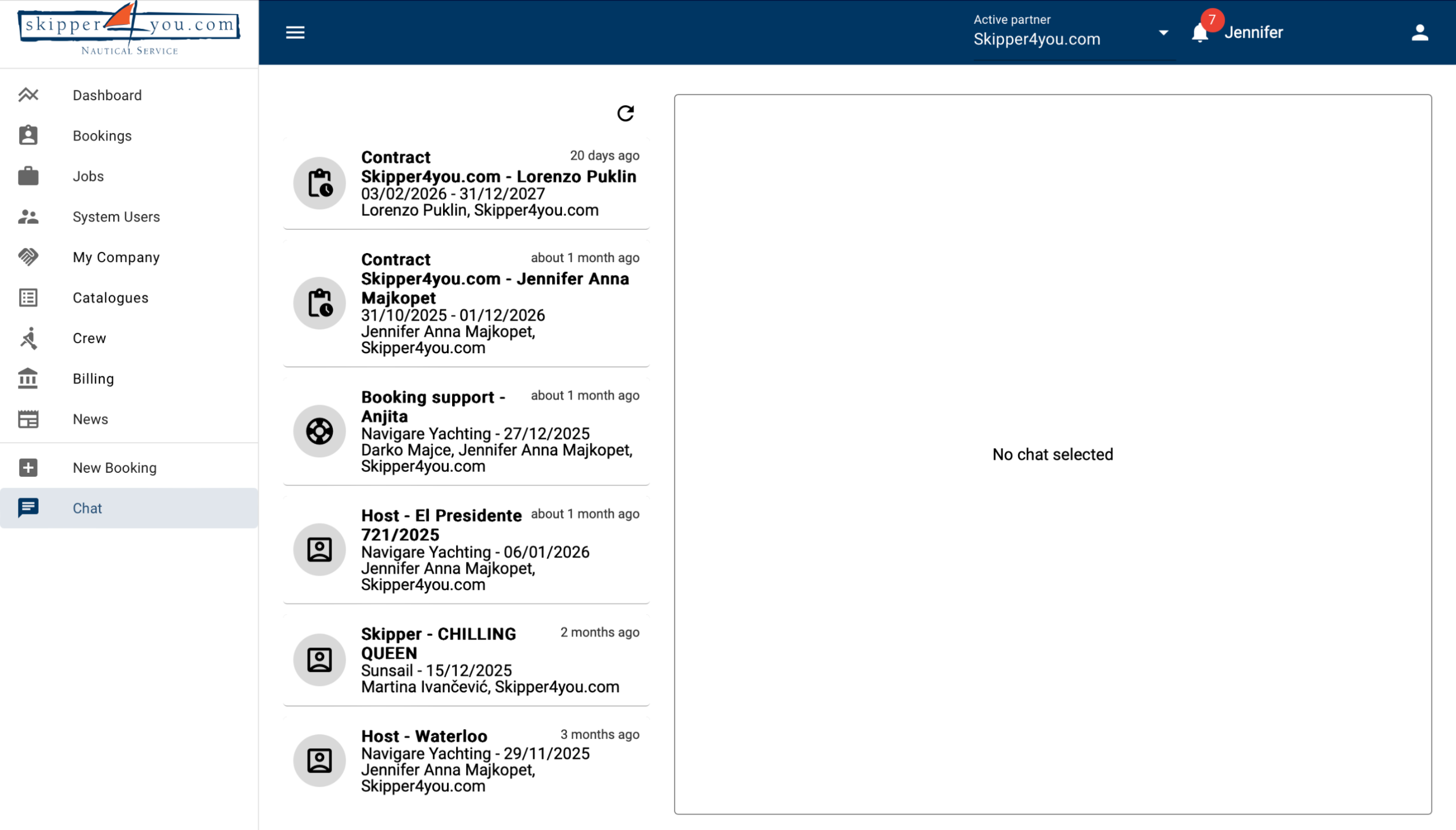
Real-time communication tool for direct messaging with crew members regarding bookings, contracts, and operational coordination.
Frequently Asked Questions (FAQ)
Yes. The platform is scalable and used by both smaller charter companies and large fleet operators.
Yes. Multiple users can work in the system simultaneously, with clear roles and permissions.
Yes. Charter companies can manage and maintain their own crew database within the app.
Availability is tracked digitally and updated within the system, providing dispatchers with a clear overview.
Yes. The app provides visibility into past assignments and engagement history.
It centralizes availability, communication, and job-related information in one system, reducing manual coordination.
Last-minute updates are managed digitally within the app. For urgent situations, dispatchers and crew can communicate via in-app chat, while real-time notifications alert users immediately when changes occur — enabling faster reactions during peak operations
Notifications are delivered inside the app via the notification bell, as well as by email. Each user can individually choose which types of notifications they want to receive and through which channel, ensuring important updates are never missed while avoiding unnecessary noise.
Yes. Crew-related communication is stored within the platform for full transparency.
Yes. All relevant job and vessel details can be shared digitally with crew, with vessel data automatically pulled from NAUSYS, ensuring accuracy and consistency across operations
Yes. Contract-related information is handled within the app.
Yes. The app supports structured communication between charter companies, dispatchers, and crew. There are different comment types to ensure clarity and control:
· Shared comments – visible to all parties
· Internal comments – visible only to employees within the same company
· Management comments – visible to dispatchers and charter management
This ensures transparent communication while keeping sensitive internal information properly separated.
Crew invoices are created and managed digitally, reducing manual processing.
Crew identity is verified using secure digital identity verification powered by Microblink.
Yes. Different access levels can be defined for dispatch, management, and finance.
Yes. Operational data can be exported for internal reporting.
Yes. It provides a structured overview of crew operations and workload.
Onboarding is designed to be fast and supported by the Skipper4You team.
Yes. Training and ongoing support are available.
Reduced manual work, clearer processes, fewer errors, and better operational control.
In crew coordination, communication, and invoicing workflows.
Yes. Skipper4You is built on over 20 years of real crew dispatch experience in the charter industry.
Bookings can be pulled directly from NAUSYS, but they can also be created manually within the app, allowing flexibility for different operational scenarios and non-integrated cases.
Yachts can be imported automatically from NAUSYS, but they can also be added manually when needed — ensuring the system can be used even outside fully integrated environments.
Dispatchers can immediately update the booking, remove the crew member, and assign a replacement while keeping the full booking history intact.
Yes. Crew assignments can be changed directly on an existing booking without duplicating or recreating it.
Yes. Each booking includes a history of changes, providing visibility into updates made over time.
Yes. Multiple dispatchers can work simultaneously, with structured permissions to avoid conflicts.
Yes. Crew selection is fully controlled by dispatchers and charter policies.
Yes. Crew documents include expiry dates and are visible before assignment.
Expired documents are clearly visible, and crew cannot be assigned until documentation is valid.
Yes. The platform is designed for high-volume, fast-paced charter operations.
Yes. New users can be created quickly and deactivated when the season ends.
By centralizing data, communication, and documentation in one system.
Yes. Finance roles can be limited to billing and invoices only.
Yes. Internal notes and shared comments are clearly separated.
Yes. Invoice edits preserve traceability and history.
Yes. Multiple companies and billing entities can be managed within one charter account.
Yes. Shared, internal, and management comments ensure controlled visibility.
Yes. Internal comments are visible only to employees of the same company.
Yes. Chats are directly connected to bookings, documents, contracts, and invoices.
Yes. All communication remains stored and accessible for reference or dispute resolution.
The charter retains ownership of its company-specific data, while business-critical and system-essential data required to operate the service is subject to shared rights or controlled by the service provider to the extent necessary for lawful and effective service delivery.
Yes. Actions and changes are traceable partly within the system and the rest in the database logs.
Yes. The platform follows GDPR and EU data protection standards, namely REGULATION (EU) 2016/679.
All data is securely stored within the European Union infrastructure of Amazon Web Services (AWS), is not transferred or shared outside the EU, and no backup or redundancy copies are stored outside the EU.
Yes. Manual bookings and yachts can be created independently.
Yes. Both can coexist in the same system.
Yes. The platform supports agency-based crew dispatching.
Yes. The system supports flexible operational setups
Yes. Features are shaped by active charter and dispatcher input.
Yes. Client feedback directly influences development priorities.
It is built specifically for charter crew operations, not generic scheduling.